Battery Location Guide
When choosing the most suitable location for your solar battery, you'll need to consider safety, compliance, functionality and aesthetics. The best location is usually an external or garage wall with a non-habitable room behind it.
Use this Battery Location Guide to determine the most suitable location for your solar battery.
Key things to consider when choosing a solar battery location
- Firstly, look at the dimensions of the battery you are having installed. This will help you determine the relevant clearances from ceilings, windows, vents, appliances and other battery components. You may be able to install your battery system with various configurations to meet the required standards.
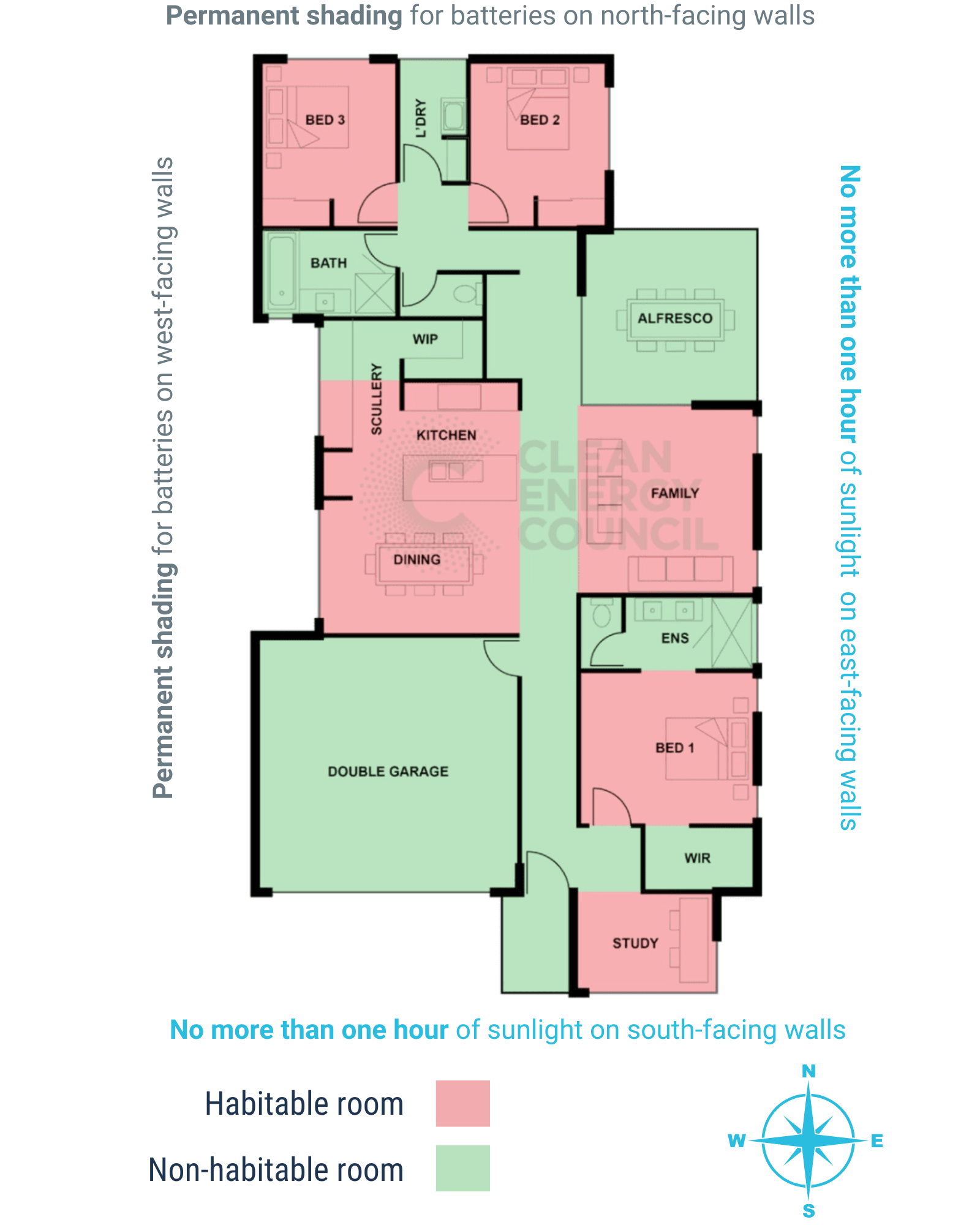
- The best location for a solar battery is usually on a garage or external wall with a non-habitable room behind it. This is the best location to start scoping suitability for your solar battery.
- Batteries cannot be installed in habitable rooms or rooms without adequate ventilation. That means no living rooms, bedrooms, kitchens or other places used for normal domestic activities.
- Clearances are required for windows, doors and vents to habitable rooms.
- Batteries should be protected from weather and out of direct sunlight at all times.
- Batteries cannot be installed close to exits or access ways.
- Bollards must be installed where vehicle strike is possible, such as in garages or driveways.
- Ground-mounted batteries must be on a hardstand surface such as concrete or paving, in areas not prone to waterlogging.
- Your installer will always have the final say on your battery location, ensuring it meets Australian Standards AS5139.
What clearances are required for solar batteries?
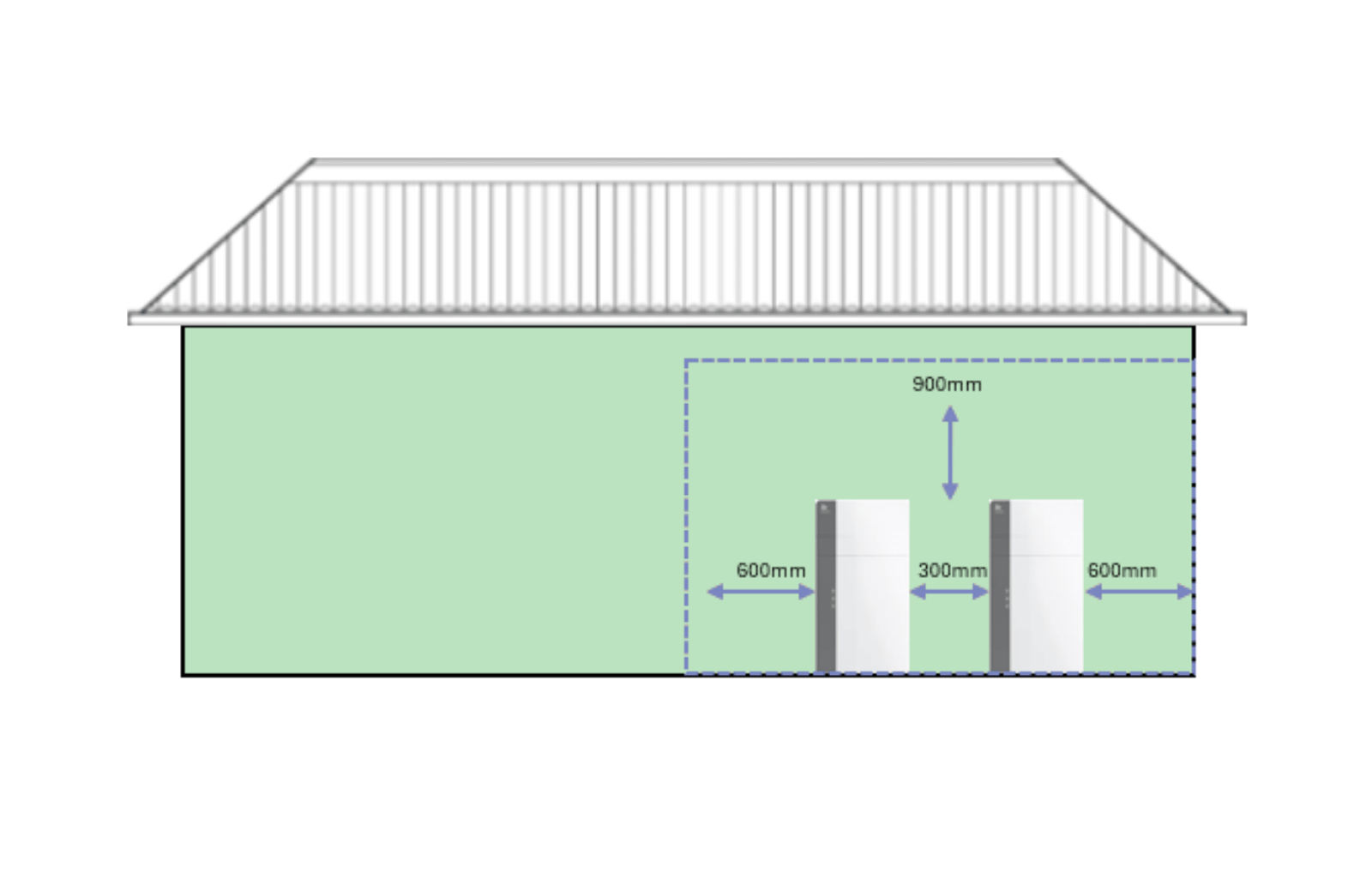
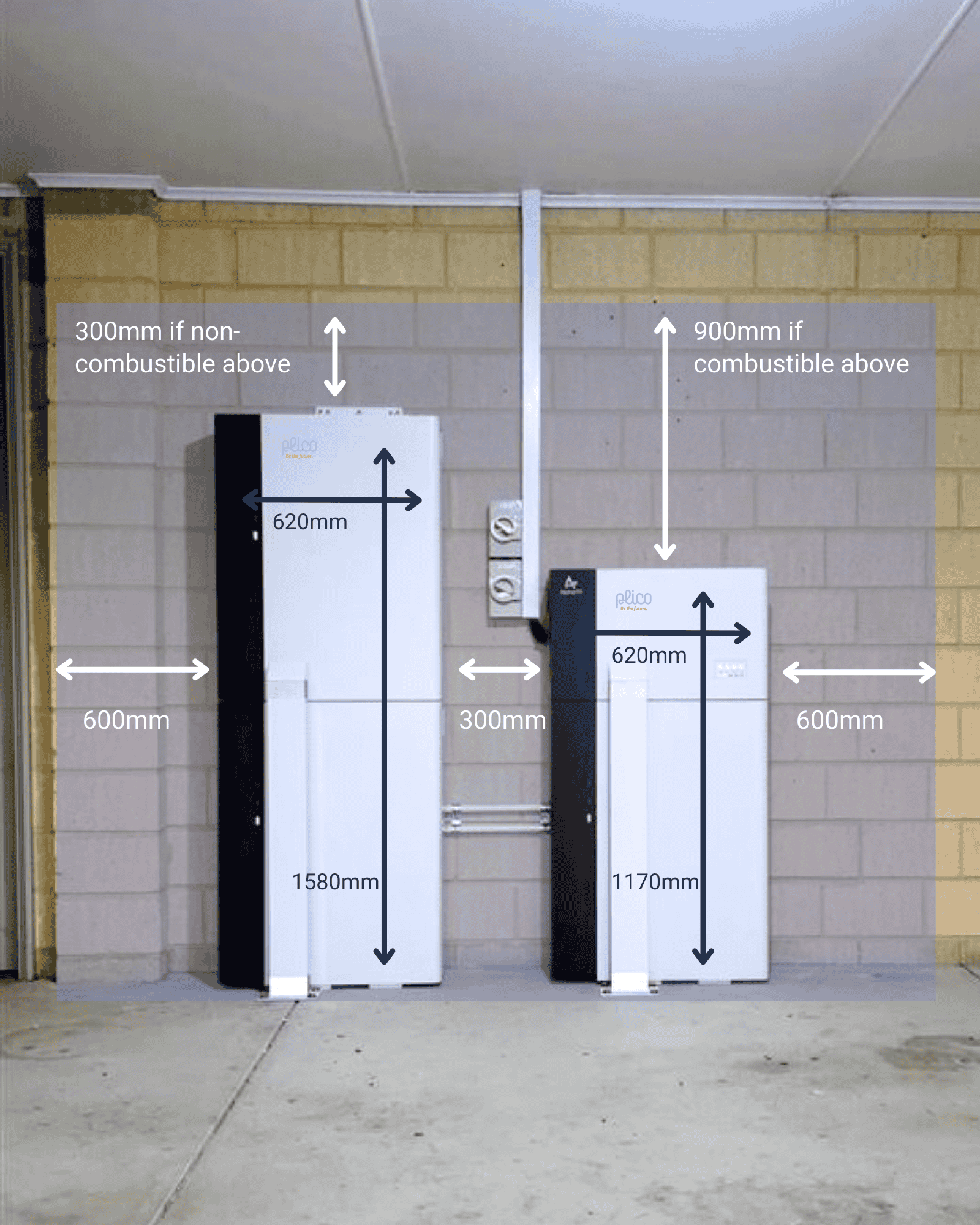
Batteries must be installed at safe distances from habitable rooms and other appliances for safety reasons. The required clearances are:
Within 900mm above the battery:
- No combustible ceiling (ie plasterboard)
- No windows to habitable rooms
- No vents or other appliances
Within 600mm either side of battery:
- No windows, doors, exits or A/Cs or GPOs/power points
- No walls or other fixed items
- No gas pipes or fixtures, or hot water systems (gas requires greater clearance)
Within 1500mm either side of battery:
- No gas bottles or gas hot water systems

.png)
What is a Habitable Vs Non-Habitable Room?
When choosing your battery location, it's important to consider if the wall behind it is a habitable or non-habitable room, as there are different clearances required.
-
All doors/exits must be >600mm either side of battery
-
Only windows to non-habitable rooms can be within 900mm above battery
-
Only vents to non-habitable rooms can be within 900mm above battery
Batteries installed outside must be out of direct sunlight and protected from weather.
How much space do I need between battery units?
Many solar battery systems have multiple components, all of which need to be installed with the required clearances. These components can be installed side-by-side or stacked in front of each other, depending on the site and system dimensions. The most important clearances to consider are:
Within 900mm above the battery:
-
No other battery unit
-
No other inverter unit
Within 300mm either side of battery (including front and back):
-
No other battery unit
-
No other inverter unit


Example: Garage location, 30 kWh Alpha battery
The diagram shown provides a 'real world' example of a 30 kWh Alpha installed in a garage. This configuration is two stacked 10 kWh units with an additional 10 kWh unit installed side-by-side. The purple zone of the diagram must be clear of:
- Windows to habitable rooms
- Doors and exits (excluding garage door)
- Ignition points such as
- A/C units
- Hot water systems
- GPOs and power points in regular use
- Large objects that can obstruct air flow
What is Combustible Vs Non-Combustible roof material?
A clearance of at least 600mm must be maintained between a solar battery and a surface (ceiling/wall) made from non-combustible material. A clearance of at least 900mm is required for combustible material. Where a solar battery is to be installed on a wall made from a combustible material, a non-combustible surface must be installed to mount the battery on, with the required clearance on either side and above the battery.
Non-combustible roof material includes:
- Brick or masonry block
- Concrete
- Compressed cement sheeting
- Ceramic or terracotta tiles
Combustible roof material includes:
- Plasterboard
- Timber
- Plywood
.png)
Example: External wall location, 20 kWh Alpha battery
A 20 kWh battery system can be installed in different configurations. In the example shown here, two 10 kWh units have been stacked to form a single unit.
This system has been installed on an external wall and is sheltered from direct sunlight and weather events. The unit meets the required clearances for:
- Doors and exits (600mm)
- Windows and vents to habitable rooms (900mm above/600mm either side)
- Ignition points such as
- A/C units and other appliances (900mm above/600mm either side)
- GPOs and power points not associated with battery systems (600mm)
- Gas bottles and gas appliances (1500mm)
Example: Front stack, 30 kWh Alpha battery
If space is an issue due to the clearances required, you can opt to stack your batteries front to back. Some models will need 20mm space in between (in addition to the side clearances already mentioned), while some may need a larger area for ventilation. The example shown here is a 30 kWh Alpha battery system. The battery inverter and one 10 kWh battery unit is stacked in front of two 10 kWh battery units at the back.
When stacking your battery units in this way you'll need to consider:
- Minimum clearance between batteries
- Minimum clearance each side of and above batteries
- Suitability in narrow areas
- If bollards are required to prevent vehicle strike (this will extend the area your batteries require)
.png)
Need advice?
At Plico, we're here to help. If you're an existing Plico customer, simply reach out to your Plico Project Manager with any questions you have. If you want to see if a solar battery is right for you and your household, you can chat to the switched-on people at Plico on 1300 175 426, and we'll happily recommend an affordable solar + battery system that will help you save on your energy bills, beat blackouts and achieve greater energy independence, as well as earn rewards with our innovative independent Virtual Power Plant!
For more information about suitable battery locations and how we help you pick the right spot, download a copy of our Battery Location Guide.
You have questions? We have answers
We are breaking down all of the solar + battery question, myths and misconceptions out there! Read through our blogs to learn more.