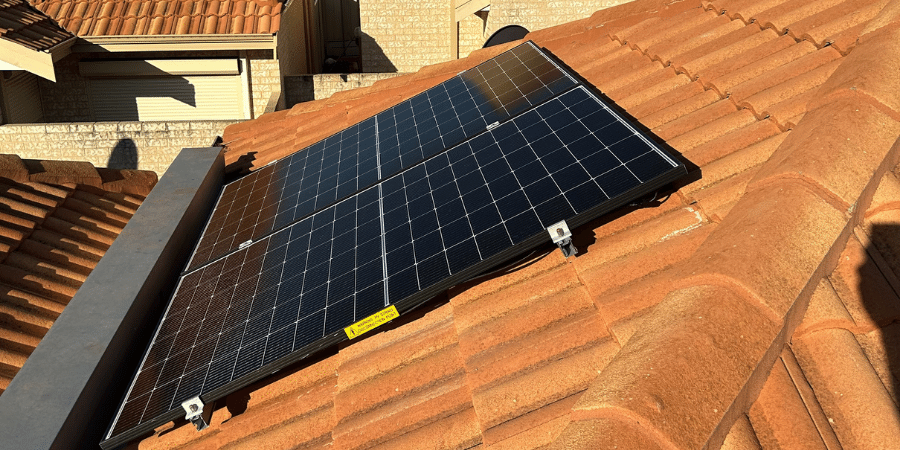


Understanding Solar Panel Efficiency
Solar panels convert sunlight into electricity. This is known as the photovoltaic (PV) effect, which is why solar panels are sometimes called PV panels or modules.
While all solar panels work the same way, some are more efficient than others. The type of silicon the solar panel is made from, as well as how they’re positioned and how regularly they are maintained, will all impact their efficiency.
The solar panel efficiency formula
To calculate solar panel efficiency, you divide the panel’s maximum power output (Pmax) by the total amount of solar power it receives and the panel’s surface area. The formula is as follows:
Efficiency = (Panel Power (W) / (Panel Area (m²) x 1000 W/m²)) x 100%
To test solar panel efficiency properly, manufacturers often use Standard Test Conditions (STC) in a controlled laboratory environment. Testing allows for a fair comparison of different panels by providing a consistent benchmark of their peak performance.
Which types of solar panels are most efficient?
A solar panel’s efficiency can depend on external factors, such as how clean it is and whether it’s shaded or has clear access to the sun. Certain types of solar panels are known for their high efficiency.
What are monocrystalline solar panels, and why are they the most efficient?
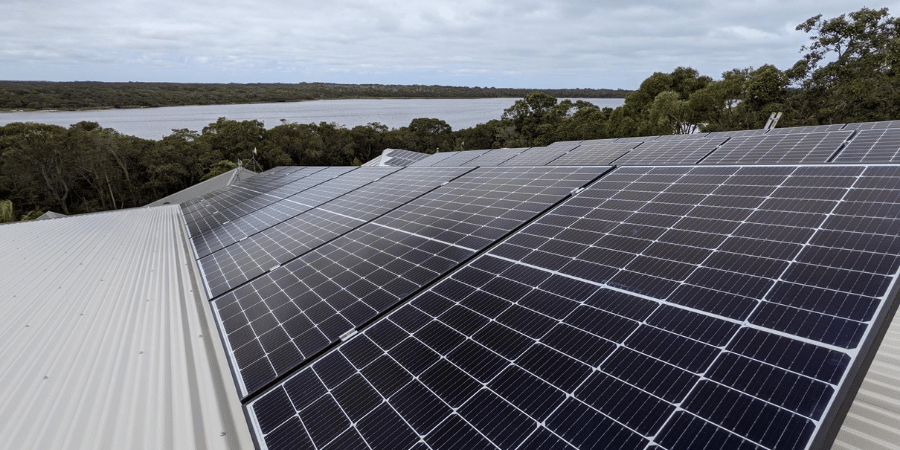
Monocrystalline solar panels are the most efficient panels on the market. They are made from a single, pure silicon crystal, which allows electrons to move freely, resulting in higher efficiency.
Monocrystalline solar panels are manufactured using several different cell types, which means that how efficient your monocrystalline solar panel is will also depend on which cell type it’s made from.
The most efficient monocrystalline solar panels utilise N-type cells; the three main types of N-cells are heterojunction (HJT), TOPcon, and back-contact (BC).
Monocrystalline solar panels are more efficient because they generate more watts. They are, however, more expensive due to this increased efficiency.
As monocrystalline panels are becoming much more affordable, mono panels are the most popular type of panels for houses.
How efficient are polycrystalline solar panels, and where are they used?
Polycrystalline solar panels are made from multiple silicon fragments melted together, which slightly reduces their efficiency. They have a speckled blue appearance, in contrast to the uniform black appearance of monocrystalline solar panels.
Polycrystalline panels used to be considerably cheaper than monocrystalline panels, but the gap between the two types has narrowed. While less common in new installations, polycrystalline panels offer a mid-range level of efficiency. Depending on the size of your system and your roof, they can be a good option.
Large factories, warehouses and commercial buildings may choose poly panels because these panels can cover big rooftops and land areas with cheaper panels.
What are thin-film solar panels, and when are they a good choice?
Thin-film panels are a far less common solution for residential rooftops, mainly because they are not as efficient as other types of PV panels.
This type of panel is created by depositing a very thin slice of PV material onto a substrate. The advantages of using them are that they are very flexible and relatively inexpensive.
For this reason, they’re often used on RVs, buses or boats.
Solar panel types compared
|
Panel Type |
Efficiency Range |
Appearance |
Cost Trend |
Common Uses |
Pros |
Cons |
|
Monocrystalline |
~18–24% |
Black, uniform look |
Becoming more affordable (was highest cost) |
Most popular choice for homes |
Highest efficiency, long lifespan, performs well in heat |
More expensive than polycrystalline |
|
Polycrystalline |
~15–18% |
Blue, speckled look |
Used to be cheaper, now gap has narrowed |
Older installs, commercial rooftops, budget systems |
Lower upfront cost, reliable mid-range option |
Less efficient, less space-effective |
|
Thin-film |
~10–13% |
Thin, flexible sheets |
Generally inexpensive |
RVs, boats, buses, niche applications |
Lightweight, flexible, cheaper |
Low efficiency, shorter lifespan, not common for homes |
For a full breakdown of the different types of solar panels, read our blog What Are the Various Types of Solar Panels? | Plico Energy
Can any factors affect the efficiency and output of a solar panel?
Plenty of factors can affect solar panel efficiency. Some of these factors are external, including things like dirt, shading and air temperature.
Other factors affecting solar energy efficiency are internal, like the size of the panel and what type of material it’s made from.
How does dirt affect solar panel efficiency?
Dirt and debris reduce efficiency by blocking sunlight from reaching the solar cells.
If dirt, salt, dust, pollen or bird poo is allowed to build up or ‘soil’ your solar panels, it can block sunlight from reaching the solar PV cells, which reduces solar cell efficiency.
If a solar panel becomes heavily soiled, it can become a ‘hot spot’ where energy is expelled as heat instead of being converted into electricity. Over time, this will lead to permanent damage and further efficiency loss.
You can manage this dirt build up by cleaning your solar panels, particularly if you live in coastal or dust-prone area. Read our blog on solar panel cleaning Best Way to Clean Solar Panels | Plico Energy to find out how.
Does heat reduce solar panel efficiency?
Although maximum sunlight will boost your solar power panel efficiency, too much heat will affect cell temperature and can reduce your solar system’s performance.
Overheating impacts your solar panel’s conversion efficiency by causing a drop in voltage, which reduces your panel’s overall power input. While the current increases slightly with temperature, the voltage reduction is more significant, leading to a loss in efficiency.
If you live in an area with high air temperatures, such as Australia, your solar provider will install solar panels with a small gap between the panel and the roof surface to allow for the airflow needed for efficient solar power.
How does the orientation and tilt of solar panels affect efficiency?
The orientation and angle of panels will definitely affect efficiency. Orienting your solar panels towards the sun (in Perth and Sydney, this means pointing them in a northerly direction) will give them the maximum sun exposure they need for high efficiency.
Tilting the panels so that they’re directly in the sun’s path will also maximise their efficiency. Panels with a slight slope are also more likely to stay clean, because rain will wash off a lot of dirt and debris.
Does the inverter affect my solar efficiency?
Yes, your inverter has a significant impact on your solar power panel efficiency.
Solar panels are responsible for the energy output and generating direct current (DC) electricity. Your inverter is responsible for converting that electricity into alternating current (AC) energy that you can use in your home.
A higher-quality inverter will convert more DC electricity into AC electricity. But the right inverter doesn’t necessarily mean the most expensive one. The size of your inverter relative to your solar panel array is crucial for efficiency.
If your inverter is too small for your solar array, it will cap its energy output during the peak sunlight hours of the day. If an inverter is too big, it will operate less efficiently. An experienced installer will know how big the inverter should be and size it accordingly to maximise efficiency.
What is DC cable loss in solar systems?
DC cable loss, also known as voltage drop, refers to the power lost as electricity travels from the solar panels to the inverter.
It’s the electrical resistance of the cables that the electricity travels through that causes the cable loss or voltage drop.
Effective solar system design is the best way to mitigate against DC cable loss. Using shorter, thicker cables and high-quality materials, as well as ensuring every connection and junction is secure and free from corrosion or debris, minimises the impact of DC cable loss.
What is AC cable loss in solar systems?
AC cable loss is similar to DC cable loss, although it refers to the power lost in the cables between the inverter and your main switchboard or the grid.
Unlike the voltage drop experienced as part of DC cable loss, AC cable loss leads to a voltage rise. This is because when your inverter is exporting electricity to the grid, it has to operate at a higher voltage than the grid’s voltage so that it can ‘push’ the electricity through.
If the cable is too long or thin, it creates too much resistance, which leads to an even greater voltage rise. If that rises above a certain threshold (255V in Australia), it will automatically shut down to reduce power output to protect the grid.
Using thicker cables and reducing the distance between the cable and the inverter is the best way to minimise the risk.
Solar panel efficiency over time
Solar panels naturally degrade over time, reducing their solar energy efficiency. Most degrade or decline in efficiency at a steady rate and have a typical lifespan of around 25 years.
This is why most solar panel manufacturers offer a typical warranty of 25 to 30 years.
Keeping your solar panels clear of debris and ensuring they are correctly installed to minimise the impact of excessive temperatures are the best ways to prolong the life of your PV panels.
You can also protect your investment by researching a system’s degradation rate and manufacturer’s warranty, as well as its overall efficiency.
Ultimately, understanding solar panel efficiency helps you make informed choices, ensuring your system delivers reliable and long-term energy savings.
Have a question about solar + battery?