

We’re powering homes with Solar + Battery + VPP

Select your state  

Western Australia
New South Wales

In another state? Click here for more information.

Plico Team 08/12/2025 25 min read

Solar Panels on New Build Houses: Complete Guide

So you’re building a new home and considering solar panels? Smart choice! It can be challenging to know where to start when you have numerous other decisions to make about your build. 

Luckily, the switched-on team at Plico has put together a comprehensive guide for solar panels on new-build homes. 

The sooner you do it, the sooner you’ll benefit from affordable clean energy.  

How do solar panels work with new builds? 

Rather than having to retrofit a solar system to an existing home, new builds offer you the chance to start with a clean slate. This allows you to consider positioning, alignment, wiring and system size properly. Once you (or your installer) have made those roof design decisions, you can get started. 

Basic solar system components

Installing solar panels on a new build usually involves the following components

Photovoltaic (PV) panels

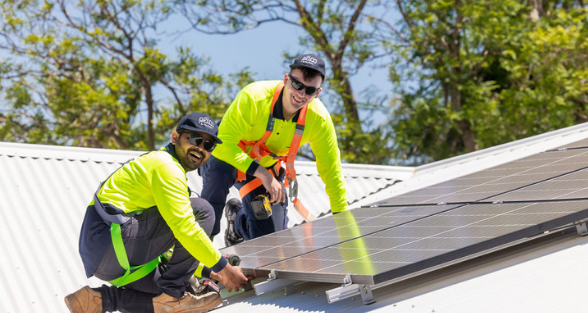
Where the magic happens - your rooftop solar panels. These go on your roof, positioned in the optimal place for sunlight exposure. They will convert sunlight into Direct Current (DC) electricity. 

Inverter

Your inverter converts the DC electricity from the panels into Alternating Current (AC) electricity that powers your home appliances. 

Electrical connections 

You need to wire the system into your home’s main electrical switchboard so that you can use the electricity and send excess energy to the grid (for grid-connected systems). 

Adding a Battery 

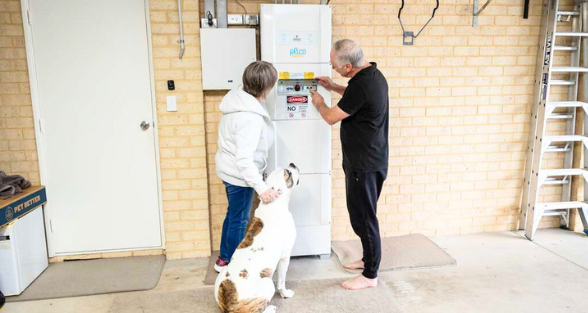
Adding a battery to your solar system allows you to store excess electricity so you can use it at night. Including a battery with your solar panels is more cost-effective and efficient than retrofitting one later on. With battery rebates available, there’s never been a better time to get a solar battery. 

Grid connection for new builds

Unless you are building an off-grid’ home, you’ll need to connect your solar system (and your home) to the local electricity network.

Your solar and battery provider will design a system that’s the right size for your roof and can meet your home’s electricity needs. They will also take care of the appropriate application process before installation. The solar installation process may include the addition of a bi-directional meter that can measure your electricity flow. 

Being connected to the grid allows you to access grid power when you need it (such as at night time or when you ramp up high energy use appliances). You can also send excess electricity back to the grid, and receive a feed-in tariff

Are there any key benefits to installing solar panels on new-build houses? 

In a word, yes. Not only can you start saving immediately, but can be more cost-effective to install solar panels on a new build than it is to retrofit them around an existing property. And the benefits don’t stop there. 

Immediate energy savings

Installing a solar system during the building process means immediate energy savings. With solar panels installed before you move in, you start saving money on your power bill straight away.. This means you’re already seeing a return on investment. And when you pair your solar panels with all-electric appliances in your home, you’re on your way to creating the perfect sustainable home.

Cost advantages vs. retrofitting 

Speaking of savings, it can be more cost-effective to install solar panels on a new build than it is to retrofit them to an existing property. Your installer can potentially use the same scaffolding and work crew as your builders, saving on costs. 

Your system will be more efficient because you can design your roof space to be pitched for maximum sun exposure. Your architect will work with your solar panel provider to make sure chimneys or skylights don’t create shading  on the panels. 

Environmental impact

By investing in solar, you reduce your home’s environmental impact from day one (as well as reducing your own carbon footprint too). 

Energy independence from day one

In addition to reducing your home’s reliance on fossil fuels, solar panels on a new build also increase your energy independence. Rising electricity rates will not hit you so hard. And, if you opt to add a battery to your system, your battery will protect your home against potential grid blackouts or power outages and save even more on your power bills.

Enhanced property value

Unsurprisingly, all of these great benefits are likely to make your home more valuable if you want to sell. Demand for energy-efficient homes is surging, with experts suggesting solar panels could add tens of thousands of dollars to the value of your home. 

Are there any essential planning factors for new-build solar installations that I need to consider? 

Quite a few, but don’t worry, we’ve got you covered. As with any install, you need to consider the location and orientation of your panels.

With a new build, you’ve got more chances to make decisions that have an impact on how well your system works. 

Roof orientation and pitch

In the Southern Hemisphere, solar panels can provide the most electricity over the course of the year when they are installed on true north-facing roofs, as this orientation captures the greatest amount of sunlight overall. 

Solar panels can also be effectively placed on east- and west-facing roofs, which can be beneficial if you want to generate more power earlier in the morning or later in the afternoon. 

One of the advantages of a new build is that you can plan for these orientations during the design phase to suit your energy needs.

Depending on your location, solar panels should be installed at a pitch angle that captures the most sunlight throughout the year for optimal energy production.

Roof size, shape, and material selection

When it comes to solar panels, size matters. To get the most bang for your sun buck, you need to make sure you have enough usable roof space. You also want to ensure that there is uninterrupted sun exposure on your panels and that they are not affected by chimneys, skylights, or voids. 

Factor your solar panels into the decisions you make regarding the materials you use for your roof, as well. Metal are ideal materials for mounting solar panels. Tiled roofs may look pretty, but they can be challenging for installation due to their more fragile nature and the same applies to slate. 

Shading analysis

You don’t want to throw shade at solar panels. A shading analysis means plotting out any potential shadows that could fall on your new solar system (think neighbouring trees or homes, as well as your own planned architectural features) and planning panels around them. 

One of the great benefits of installing solar panels on a new build is that you can identify and address issues before they cause problems. 


What about getting my new home's electrical setup ready for solar?

The good news is that preparing your new build for solar is not as complex as it sounds. The even better news is that your solar provider will take care of preparing your home for solar, which means less paperwork for you. 

Single or three-phase power

Single-phase and three-phase power are the most common types of power distribution. Most homes opt for single-phase power because it’s cheaper to install and suits most household appliances. 

If your new build has significant power needs (how many gaming PCs does one family need?) or you’re already future-proofing for higher energy needs, you could consider investing in three-phase power.  

Pre-wiring and conduit installation

Whichever system you choose, you’ll need to run wire from the solar panels to the inverter and then onto the switchboard. Your electrician will make sure the correct gauge wire and appropriate conduit are used to meet electrical codes and safely handle the power generated. You may also need to consider the internet wiring if you are installing a battery and hardwiring it to your modem. 

Inverter location planning

You need to instal the inverter somewhere easily accessible in case there are any issues with it. You could choose somewhere cool, shaded and dry with plenty of air flow, like a garage. 

How do I plan for future solar needs?

Installing solar panels has immediate benefits. But with a little bit of thought and planning, you can make decisions that will benefit you for the long term as well.  

Battery storage preparation

While you might not be ready for a battery, it makes sense to plan for one. The advantage of a new build is that you can have your electrician pre-wire your home for a battery. This will save you time and money in the future. 

You should also choose an inverter that is hybrid or battery-ready so that you don’t need to replace it when you choose to add a battery. 

EV charger integration

You might not have an electric vehicle right now, but there’s a chance that you might in the future. Which means you’ll need to take its charging needs into account. Installing a larger inverter means you can add more solar panels later if an electric vehicle sparks your attention. 

Expandability options

Another way to make sure your solar power capacity can grow with you is to choose a switchboard (electrical panel) with enough space to include components for a solar system, battery and potential EV charger. This gives you the option to add potential EV charger to your system, as and when you need it. 


How much does solar cost on a new build? 

How much solar costs depends on your system size and how challenging the installation may be, such as number of storeys, site access, and remote location. Whether or not you are eligible for a rebate also impacts how much you’ll pay for your system. 

Plico’s innovative weekly payment system means there are no big upfront costs on standard installs. Instead, you get it all for one low weekly instalment, making it easier for you to make the switch. 

Upfront costs vs. mortgage integration

Another good thing about installing solar panels on a new build is that you have the option of including the cost of your solar system in your mortgage, if you wish to do so. Some builders will include solar panels in their build costs, so they are treated the same as other features of the house.  

Available rebates and incentives

The sun’s shining on solar at the moment, with various government rebates to go green and invest in renewable energy. 

Nationwide, there’s the Small Scale Renewable Energy Scheme, Cheaper Home Batteries Program, while states such as WA are also offering their own financial incentives.

Long-term ROI calculations

Working out how long your payback period or ROI is will depend on the system that you have bought, and its capacity. Typically, it’s from 3 years. Partnering with Plico is different – there aren’t any big upfront costs, just one low weekly instalment. 

That means with Plico, you start seeing a return on investment straightaway.


Do I need to find a solar provider, or will the builder arrange installation? 

Many homebuilders can include solar as a standard feature or an upgrade, and they often use a preferred installer, sometimes adding a margin of around 20% for coordinating the work and managing site access. That said, you are absolutely entitled to shop around and choose your own solar provider if you prefer, ensuring you get a system that actually fits your needs.

Coordinating installation timeline

Once you’ve chosen your installer, make sure that you let your builder know and put them in touch so that they can get together in the planning stage and coordinate the installation timeline. 

If they work together, they can potentially share infrastructure (such as scaffolding, if required) and information to make sure that your solar panels complement your home design and are installed in the optimal places to get maximum sunlight. 

Note that your installer should be Solar Accreditation Australia accredited as a minimum. 

Permits and inspections process

Having the right permit is an essential part of the process, as is having the system inspected. 

You will need a building permit and an electrical permit, as well as approval from the utility company to connect your system to the grid. 

Your installer will take care of each of these steps.

If you want to discuss your solar needs in a friendly, no-obligation way, you can chat with one of the switched-on Plico team members on 1300 175 426 or by filling out the contact form below. As a trusted, local solar battery provider, we'd love to assist you in creating your dream home! 

avatar

Plico Team

Plico is a leading Australian clean energy company building a sustainable energy grid for the future. Born and bred in WA, our innovative membership model puts power back into the hands of the community, allowing our members to save money, enjoy blackout protection and generate their own clean energy, all for one low weekly instalment.