
 Plico Team
What Size Solar Battery Do I Need?
 Plico Team : 05/07/2022
We explain what size solar battery you need to run your home so you can maximise your savings and reduce your reliance on the electricity grid.



Solar + Battery Rebates, Loans and Discounts available!
Find out what incentives you're eligible for and how much you could save.

Interest-free loan now available!
Find out if you're eligible for the NSW $15,000 intertest-free loan.


Solar + Battery Rebates, Loans and Discounts available!
Find out what incentives you're eligible for and how much you could save.
Interest-free loan now available!
Find out if you're eligible for the WA $10,000 intertest-free loan.

%20LandingPage%20Icons-04.png?width=60&height=60&name=(RGB)%20LandingPage%20Icons-04.png)
.png?width=174&height=174&name=VPP%203000%20batteries%20stamp%20(2).png) Unlock more rebates when you join the Plico VPP!
Unlock more rebates when you join the Plico VPP!
You can access WA battery rebates and interest-free loans with Plico's Virtual Power Plant.
.png)
Solar battery technology continues to improve, offering more capacity, improved aesthetics and more efficient compatibility and integration. It’s still a sizeable investment, and with the federal battery rebates in full effect, now's the time to determine which system is right for you.
Plico’s passionate about staying up to date with the latest tech, and we’ve researched to help you make an informed decision. Here’s a comparison of the premium market favourites, Signenergy SigenStor vs. the Tesla Powerwall 3, so you can decide which battery best suits your needs.
A home or solar battery is a rechargeable device that stores the electricity generated by your solar panels (or the grid) for later use. You can then use the stored energy later in the day and overnight when your solar panels stop producing electricity.
If you are on a time-of-use electricity tariff, you can also use a solar battery to store electricity from the grid when prices are low and use it when your tariff increases. Stored energy in a solar battery can also be used to power homes during blackouts and grid outages.
Essentially, a solar battery allows you to use more of your generated clean energy and save money on your electricity bills, even when the sun is down.
| Feature | Tesla Powerwall 3 | Sigenergy SigenStor |
|---|---|---|
| Aesthetics | Sleek, minimalist all-in-one unit with integrated inverter; strong brand appeal and premium finish. | Clean, modern stacked design; modular and professional-looking but less brand-driven. |
| Smart Technology | Household energy learning, solar optimisation, and weather-predictive charging for outage preparedness. | AI-driven energy planning, EV integration, and bidirectional EV-to-home backup capability. |
| Integration & Compatibility | AC-coupled; retrofits to most solar systems but operates as a closed ecosystem. No blackout support for existing 3-phase solar. | Works with most inverters and solar systems; supports AC and DC coupling and multi-brand flexibility. |
| Battery Capacity | Fixed 13.5 kWh per unit. | Modular batteries in 5 kWh or 8 kWh units. |
| Scalability / Stackability | Expandable by adding full 13.5 kWh units, up to 40.5 kWh total. | Fully stackable; can expand in smaller increments as energy needs grow. |
| Backup & Blackout Protection | Whole-house backup for single-phase homes. 3-phase homes may require multiple units or compromises. | Whole-house backup with full 3-phase support, all circuits, and generator integration. |
| Price Range | Higher upfront cost; expansion comes in large capacity jumps. | Competitive premium pricing; start smaller and expand over time. |
| Warranty | 10-year performance and product warranty. | 10-year performance and product warranty. |
We’ve pitted the Tesla Powerwall 3 vs Sigenergy SigenStor across several categories to work out which is the better battery for you.
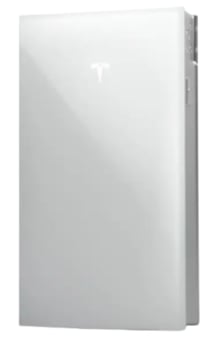
The Tesla Powerwall 3 can stand out to some for its sleek, minimalist design. It combines the battery and inverter into a single, compact unit, making the unit look neat. Its clean lines and premium finish make it well-suited for visible locations such as garages or exterior walls, appealing to users who value modern design and strong brand presence.
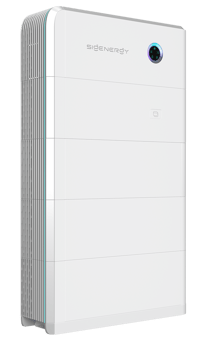
The Sigenergy SigenStor also offers a clean, modern appearance with a modular, stacked design that allows for future expansion. While it lacks the brand recognition and refined styling of Tesla, it still delivers a tidy, professional look that prioritises functionality and flexibility over visual impact.
Both systems offer innovative management features through their respective apps, allowing you to monitor and optimise energy usage.
Tesla’s technology continuously monitors how your household typically uses energy and combines this information with real-time solar production and local weather forecasts.
By doing this, the Powerwall can automatically adjust how it charges and releases energy to keep your home running efficiently.
One key advantage is its ability to anticipate severe weather. When storms or high-risk conditions are predicted, the system will charge the battery to full ahead of time. This ensures you have maximum backup power available in case of an outage, while still helping reduce reliance on the grid during normal conditions.
Sigenergy uses AI to analyse your home’s typical energy-use patterns and combines this with real-time solar production and EV activity.
By doing this, the system creates a tailored energy plan that guides how it stores and supplies energy throughout the day. This includes identifying the most efficient times to charge the battery, power the home, and top up an electric vehicle.
Because the SigenStor system supports bidirectional EV charging, it can also draw energy from a compatible vehicle when needed, providing your home with an additional backup power source and improving overall energy efficiency.
The Tesla Powerwall 3 can be added to most existing solar systems without replacing the current inverter, making it a flexible option for homes with solar already installed. Because it is an AC-coupled unit, it operates independently of the original solar equipment.
This setup means energy is converted multiple times before it’s stored and used in the home, which can lead to small efficiency losses compared to systems designed to work together from the start. The Powerwall also operates as a closed ecosystem, meaning it doesn’t integrate with other battery brands and must be used as the sole storage solution in the system.
The Sigenergy SigenStor integrates with almost any solar system or inverter, making it easy to add to an existing setup without significant changes.
And, because it supports both AC and DC configurations, you can combine it with components from different brands and expand the system over time.
This gives you far more flexibility than closed ecosystems, allowing you to increase battery capacity, upgrade in stages, or adjust your setup as your energy needs grow.
The Tesla Powerwall stores 13.5 kWh of energy, which is roughly enough to power an average home through the evening and keep essential appliances running during a blackout.
It’s a fixed-size battery, meaning you can’t increase its capacity internally. If you need more stored energy, you simply add another Powerwall. For most households, a single unit provides a good balance of everyday energy storage and reliable backup power.
Sigenergy’s SigenStor uses a modular battery design, allowing you to better match your energy needs with your storage. Each battery module comes in 5 kWh or 8 kWh sizes, and these units can be stacked to increase capacity as your energy demands grow.
A single system can support multiple modules, allowing you to start small and expand over time rather than committing to a fixed storage capacity upfront.
The Tesla Powerwall 3 is also expandable, allowing you to increase your total storage capacity by adding additional 13.5 kWh units.
Each Powerwall is a fixed-size battery, but multiple units can be linked together to form a larger system, up to 40.5 kWh. This lets homeowners scale their storage as their energy needs grow, whether that’s adding more solar, running larger appliances, or improving backup coverage during outages.
One of Sigenergy’s key advantages is its stackable modular design, which lets you build the exact storage capacity you need.
Each battery module comes in either a 5 kWh or 8 kWh size, and these units can be physically stacked together within the same system. This means you can start with a smaller setup and add more modules later as your energy use grows, without replacing any existing equipment. It provides a flexible, scalable solution that adapts to changing household demands over time.
The Tesla Powerwall 3 can supply whole-house backup power, but it is designed primarily for single-phase homes. If installed in a three-phase home, it can still work, however during a blackout, the battery’s backup will cover only one phase, not all three.
If you want a full three-phase backup in a multi-phase home, you may need multiple Powerwalls or a different battery system designed for three-phase installations.
The Sigenergy SigenStor can provide whole-house backup when installed with the Sigen Energy Gateway, supporting full three-phase backup for homes with three-phase wiring.
This allows all circuits to stay powered during an outage rather than limiting supply to essential loads only. The system can also integrate with a standby generator, providing households with an additional layer of protection during extended power outages.
The Tesla Powerwall 3 typically costs up to $13,150 before federal government rebates, which generally includes the battery, installation, and the required Gateway.
Because each Powerwall is a full-size 13.5 kWh unit, expanding the system later means adding another identical battery. This keeps the upgrade process straightforward, though capacity increases occur in larger increments than in modular systems that use smaller add-on units.
The Sigenergy SigenStor generally costs up to $13,000 for a comparable battery capacity, including installation and whole-house backup capability. Its modular design allows the system to be expanded in 5 kWh or 8 kWh increments as your energy needs grow. While this scalability offers long-term flexibility, it’s still important to choose the right size upfront, as government rebates apply only once, and additional modules installed later won’t receive the same incentive.
The benefit of the modular approach is that future expansions are simpler and don’t require replacing the existing battery; modules can be added as needed without significant changes to the system.
Each battery system comes with a 10-year warranty that covers the battery's performance and functionality during that period.
The manufacturer guarantees the battery will retain a certain level of usable capacity and continue operating safely and reliably for at least ten years under regular use.
The warranty typically includes defects in materials or workmanship, and ensures the battery will deliver a specified percentage of its original capacity by the end of the warranty term.
Both the Tesla Powerwall 3 and the Sigenergy SigenStor are strong, premium options for a household solar battery, however they suit different needs.
Tesla offers a clean, all-in-one design with straightforward expansion, while Sigenergy provides flexible modular storage and broader compatibility, especially for homes needing full three-phase backup.
With battery rebates available, now’s a good time to choose the system that best fits your home’s wiring, energy use, and long-term plans. Whichever way you go, you’ll be taking a solid step toward greater energy independence and lower electricity costs.
The friendly, switched-on team at Plico is always on hand to answer any of your queries. You can also check our FAQs below to see if your question has already been answered.
Both batteries can be added to an existing solar system. The Tesla Powerwall 3 can be retrofitted for AC-coupling with some efficiency trade-off and is perfectly compatible with a DC-coupled system.
The Sigenergy SigenStor supports both AC-coupled and DC-coupled systems, enabling seamless integration.
Yes. Both batteries are on the Clean Energy Council (CEC) approved product list, which means they are eligible for the Federal Cheaper Home Batteries Program.
They are also both eligible for inclusion under the WA Residential Battery Scheme, which can be stacked on top of the federal rebate. Note that there are some compatibility requirements for battery retrofits under this scheme.
Both options are long-term. The Tesla Powerwall 3 has a 10-year limited warranty. Tesla also guarantees that it will retain at least 70% of its capacity after 10 years. Industry experts predict the model has a lifespan of at least 15 years, though its capacity is likely to decline once its warranty period ends.
The Sigenergy SigenStor also has a 10-year warranty, while its manufacturer states that the battery system will retain 60% - 70% of its usable energy after that period.
If you want to discuss your solar needs in a friendly, no-obligation way, you can chat with a switched-on Plico team member on 1300 175 426 or fill out the contact form below. As a trusted local solar battery provider, we'd love to help you create your dream home.
 Plico Team : 05/07/2022
We explain what size solar battery you need to run your home so you can maximise your savings and reduce your reliance on the electricity grid.

 Sarah Molloy : 02/04/2025
When you install a solar + battery system at your home, monitor your energy and change some simple behaviours, you can cut your energy bill to nil....
 Plico Team : 09/12/2024
Solar feed-in tariffs are an important part of owning a solar system. Learn how to apply for one and they can provide savings on your power bill.