
5 min read

Changes to WA solar export limits: What does it mean for your home?

Changes to WA solar export limits: What does it mean for your home?
  • From 1 May 2026, new and upgraded solar systems in WA must meet new connection requirements

  • Systems will be subject to a 1.5 kW static export limit or, where eligible, a smart managed export option that allows more flexible grid exports

  • Batteries are more important than ever in WA, helping households store excess solar instead of exporting it, making self-consumption and VPP participation more valuable

Western Australia loves rooftop solar. But as more households generate their own electricity, managing all that energy flowing back into the grid has become increasingly important.

From 1 May 2026, new requirements apply to new or upgraded solar and battery systems connected to the South West Interconnected System (SWIS), which includes Perth, Geraldton, Kalgoorlie, Albany and the South West. The changes are designed to allow larger, more flexible systems while helping maintain the stability of WA’s isolated electricity grid by restricting the amount of solar exported to the grid. 

So, what exactly is changing, and what does it mean if you already have solar or are thinking about adding a battery?


What changes were introduced from 1 May 2026?


Solar export limit 

New or upgraded solar and battery systems with an aggregate distributed energy resource capacity of 30 kVA/kW or less will need to meet updated connection requirements.

For Synergy customers using an eligible managed export arrangement, relevant systems will need the required communications functionality so they can be remotely managed, including remote disconnection and reconnection when required. Synergy uses the CSIP-AUS communications standard as part of its functionality and commissioning requirements. 

Customers generally have two pathways.

  1. A fixed export limit

If the system being installed does not have the newly required CSIP-AUS communications built-in, the customer will have to opt for a fixed static export limit of 1.5 kW. 

  1. A CSIP system

A compatible CSIP system can maintain the communications and functionality needed for relevant export products. That can help create opportunities for greater or more flexible exports, where the network and retailer arrangements allow them.


What is a solar export limit?

When your solar panels generate more electricity than your home is using, that excess energy has to go somewhere. When you have a battery, this excess will charge the battery until its full.

Without a battery, or when a battery is full charged, it will generally be exported to the electricity grid, subject to the export limit that applies to your system.

An export limit controls how much power can flow from your property back into the grid at any one time. Importantly, this is different from the size of the solar system or inverter equipment you are allowed to have.

Under the new WA framework, a standard connection can support up to 30 kW of aggregate inverter capacity, but that does not mean a household can export 30 kW to the grid. Generation limits and export limits still apply separately.

For example, a typical large low-voltage network in metropolitan Perth includes a 1.5 kW static base export pathway, while other export arrangements may allow greater exports depending on the retailer and network requirements.

So, if you're having solar installed or upgraded in Perth from 1 May 2026, you're likely to have an imposed export limit of 1.5 kW unless you have access to flexible export limits.


Does an export limit impact how much solar energy I can generate?

Having a limit on solar exports does not limit how much solar energy your system can produce or use in your home. It simply limits how much solar energy can be exported to the grid at any one time. For most households, this is 1.5 kW.


Why batteries are becoming more important than ever

This is where batteries become particularly valuable.

Traditionally, households with solar have often exported large amounts of excess daytime generation and bought electricity back from the grid later in the day.

A battery changes that equation.

Instead of relying on the grid to take your excess solar, a battery can capture energy that would otherwise be exported and save it for later, when the sun has gone down or household electricity demand rises.

That means export limits can make self-consumption increasingly important. A well-designed solar and battery system can direct more of the electricity generated on your roof towards powering your own home rather than depending on unrestricted grid exports. The WA rules specifically allow homes on the static pathway to continue consuming solar behind the meter and storing available surplus energy in a battery.

With solar feed-in-tariffs at an all-time low, it pays to use as much of your generated energy as possible, rather than relying on exports to save you money.

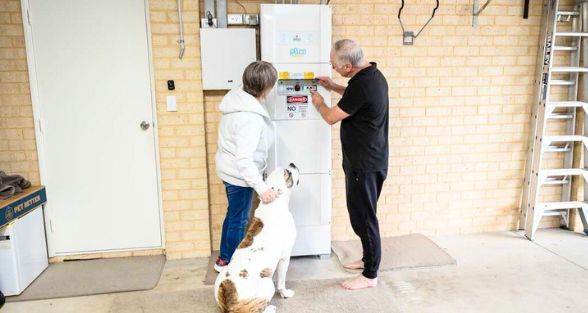
Another benefit is that batteries can become active parts of the electricity system through a Virtual Power Plant. The WA Government says these new technical requirements create opportunities for customers to participate in VPPs and other flexible export products in the future. With Plico, Virtual Power Plant participation and VPP Rewards are included with every system installed. VPPs allow you to get more out of your battery investment and give you greater control over your energy, at night and during blackouts too.


What about homes that already have solar?

If your existing system was installed before 1 May 2026 and you aren't making changes to it, the new requirements generally don't apply. You can continue to export your solar energy without limits, outside of Emergency Management Solar conditions.

The situation changes when you upgrade your system.

Adding a battery, installing an additional inverter or making certain other changes can bring the whole site under the new requirements. This means adding a battery to an older solar system may not always be as simple as attaching new equipment to what's already there. Depending on the existing inverter and system design, options can include upgrading to a compatible hybrid inverter, upgrading the broader solar-and-battery system, accepting the static export pathway, or using an appropriate compliant gateway solution. 


What does this mean for Plico customers?

For existing Plico members, there's no need to panic. If your system is already installed and you aren't making an upgrade, the changes do not automatically require you to replace working equipment. 

If you are considering a battery expansion or upgrading your solar, however, Plico will need to look at the whole system, including your existing solar inverter, proposed battery, communications and export arrangements. 

For customers already considering battery storage, the changes reinforce one of the biggest advantages of having a battery: you can keep more of the solar energy you generate instead of relying solely on exporting it to the grid. New customers to Plico will opt for the 1.5 kW static export limit.

For WA customers with solar and inverter systems greater than 5 kW, the export limit is insignificant because exports from these systems are not eligible for current solar feed-in-tariffs.


Solar feed-in-tariffs in WA

More homes are opting for larger solar, inverter and battery systems, driven by increasing energy demand, home electrification, EVs and solar and battery rebates. There are also more options available on the market for consumers wanting a higher power output from their solar and battery solution. 

Synergy’s Distributed Energy Buyback Scheme (DEBS) is limited to eligible systems up to 5 kW, meaning solar systems larger than 5 kW are not eligible for DEBS payments. For eligible systems, DEBS currently pays 2c/kWh for electricity exported outside 3pm–9pm and 10c/kWh between 3pm and 9pm. This makes system sizing an important consideration, particularly as larger solar systems can generate more energy for self-consumption and battery storage, even where that excess energy doesn't earn a DEBS feed-in tariff.


A new era for Solar in Western Australia

The new rules introduced in WA are not designed to stop households from installing solar.
In fact, they're designed to help the grid accommodate more renewable energy and larger, more capable systems while giving electricity providers better tools to manage exports when necessary. 

For homeowners, the takeaway is simple: how your energy is used is becoming just as important as how much your solar panels generate. Whether that's the ability to use your solar day and night, during blackouts or earn financial rewards via Virtual Power Plant, the new solar 'gravy train' isn't relying on feed-in-tariffs to get value from your system, it's about optimisation, flexibility and self-sufficiency. 

Interested in getting a quote for a solar + battery solution? Reach out to the switched-on team at Plico today! We'll look at your existing equipment, household energy needs and the current WA connection requirements to help determine the best solution for your needs.


Have a question about solar + battery?

New rules for WA solar and battery installations

New rules for WA solar and battery installations

New regulations will be introduced from 1 May 2026 requiring 'whole of site compliance' for solar + battery installations and upgrades. Find out what...

Read More
Solar Inverters and Battery Storage: Everything You Need To Know

Solar Inverters and Battery Storage: Everything You Need To Know

Solar inverters are a key part of your solar + battery system. Read the complete guide to solar inverter and battery storage systems before you...

Read More
Are Zero Dollar Energy Bills possible?

Are Zero Dollar Energy Bills possible?

When you install a solar + battery system at your home, monitor your energy and change some simple behaviours, you can cut your energy bill to nil....

Read More